

Facebook Marketplace is one hell of a place.
Background
I have a buddy who builds PCs and sells them on Facebook marketplace. While building PCs is not rocket science, I highly admire his business skills. Whenever I negotiate with him, I always feel like I'm walking away with a good deal. He's very transparent with his margins, and he seems to know the market value of every PC component like the back of his hand. The dude has a perfect five star seller rating with over 500 reviews. Knowing the shenanigans that go on Facebook Marketplace—and knowing that disputing a rating is nearly impossible as Meta is an AI abyss—that kind of seller rating is highly impressive and speaks to his business skills.
Recently, as part of a trade, I agreed to give a $120 discount in exchange for some working HDDs and a Ryzen 5800X which had seen some better days.
The story behind this processor, as I understood it, is as follows:
> Buddy's client hires some sketchy dude to upgrade his 5800X to a 5800X3D
> Sketchy dude barely speaks english, but markets himself as a professional and proceeds to remove the 5800X
> Boot the PC and let the thermal paste warm up for easier removal from the AM4 socket? Nahh... just yank it out. The pins will be fine.
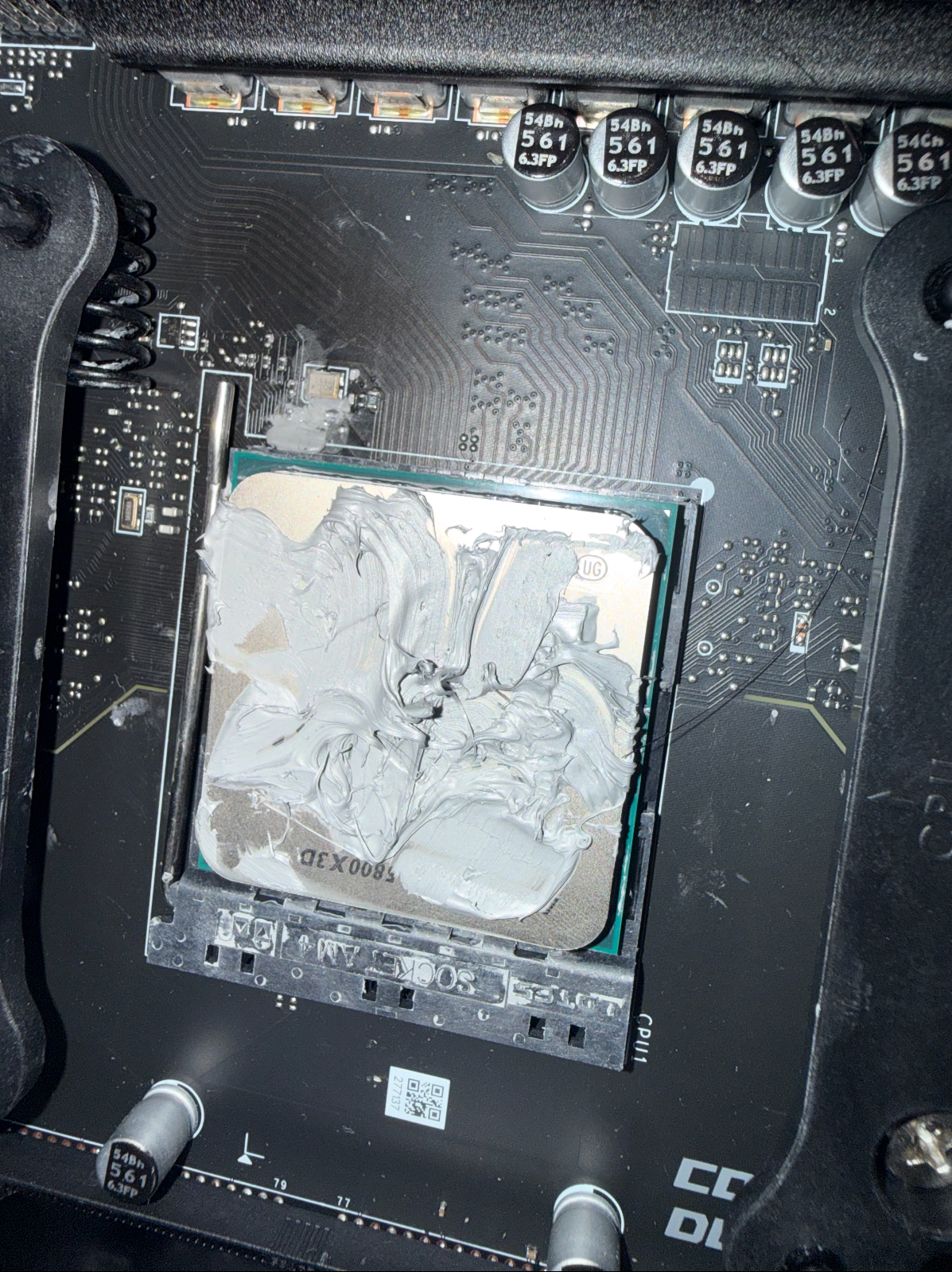
> "Why use a small amount of thermal paste on the 5800X3D when you can just use the entire syringe?"
> "Thermal paste got on the pins? No problem at all."
> "Hmmm... sorry boss, computer no work."
> Thermal paste preventing pin contact between the 5800X3D and the AM4 socket on the Motherboard.
> PC cannot POST with the 5800X3D.
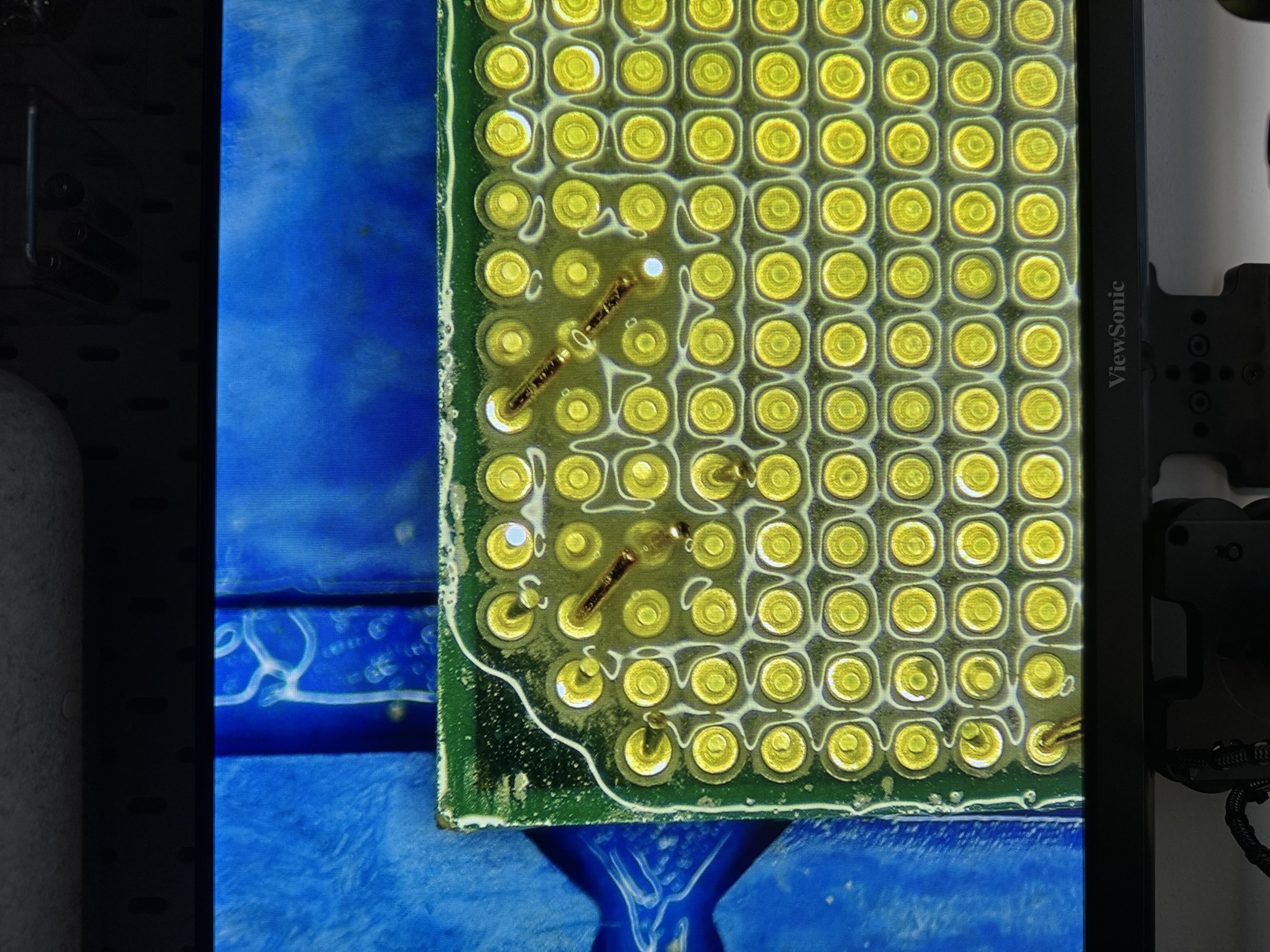
> 5800X pins are horribly bent.
Here's a pic of what my buddy's client got back from Mr. Sketchy Dude following the 5800X 'removal' and 5800X3D 'install':
I'm sure my buddy's client was rightfully upset. Apparently Mr. Sketchy promised to provide my buddy's client some compensation as soon as he got back from vacation in his home country. He's still waiting to hear back from Mr. Sketchy.
The good news is that my buddy simply put the 5800X aside and didn't attempt to straighten the pins. I watch a lot of videos from @northwestrepair (and to a lesser extent @NorthridgeFix), and a common takeaway is I wish I was the first person to attempt this repair. That is, what was once not working due to a couple of blown away SMD components now has far more serious problems due to a technician (or aspiring technician) without the appropriate equipment or experience having attempted to perform the fix.
I know. I'm not doing BGA rework or even touching a hot air station or soldering iron for this particular fix. And even if a pin does need to be replaced, desoldering it using flux, hot air, and a donor processor's pin(s) isn't rocket science either. But the point is it could have been necessary to do those things had my buddy attempted to do this himself without any equipment.
Equipment / Materials
- Cleaning
- Isopropyl Alcohol (IPA) 99%
- M.G. Chemicals: 852 – Hog Hair Cleaning Brush
- Repair
- Digital Microscope (I don't want to be prescriptive on brand / budget here, but a microscope is crucial as these pins are small)
- Relife RL-601F PCB Fixture (for holding the CPU)
- Razor blade (thin enough to get between pins; also helpful for alignment)
- Pro'sKit Ergo-Grip Tweezers (Fine Tip Curved) 120.5mm (You can possibly get away with just the razor blade, but fine tip tweezers are good to have on hand)
(In Canada, you can get the MG Chemicals and Pro'sKit equipment from Sayal Electronics)
Procedure
I first had to clean the pins using the IPA and hog hair brush. I was careful not to apply much force. I was very generous with the IPA spray bottle.
The PCB holder kept the CPU from moving when cleaning the pins.
Once everything was clean, I began the process of straightening out the pins.
Funny enough, the tweezers I had when beginning this small project were not precise enough to work on individual pins.
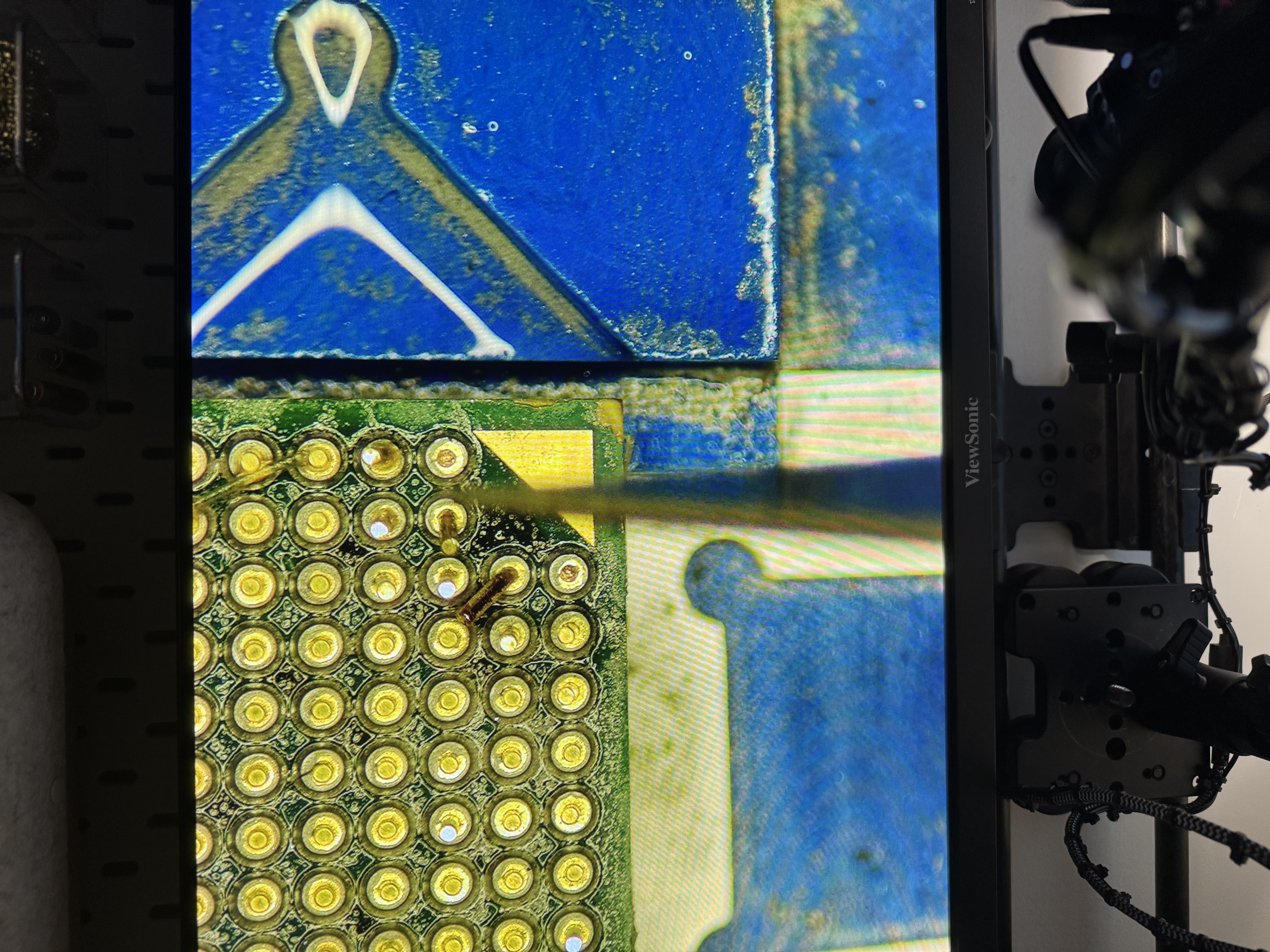
I ended up getting the TZ-204N tweezers only the next day. For the first day of this mini project, I made use of a standard razor blade in lieu of tweezers. Because of this, the razor blade definitely did most of the work.
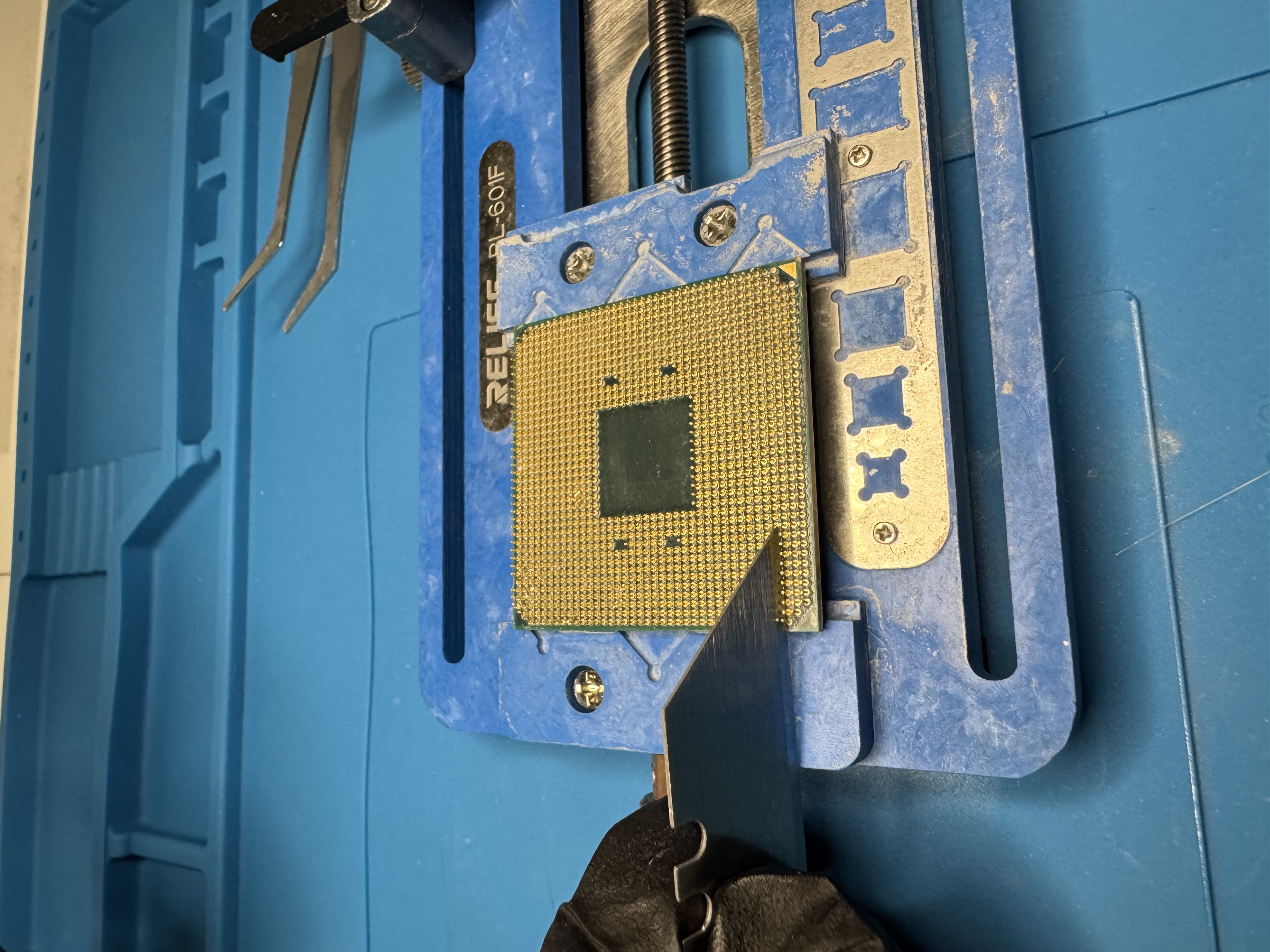
While I suppose there's a risk for the razor blade to damage the copper on the pins or even the pads underneath them, foregoing intentionally applying enough force to damage the underside of the processor, I think the razor blade definitely has its use in fixing bent pins—even if its only for the final alignment.
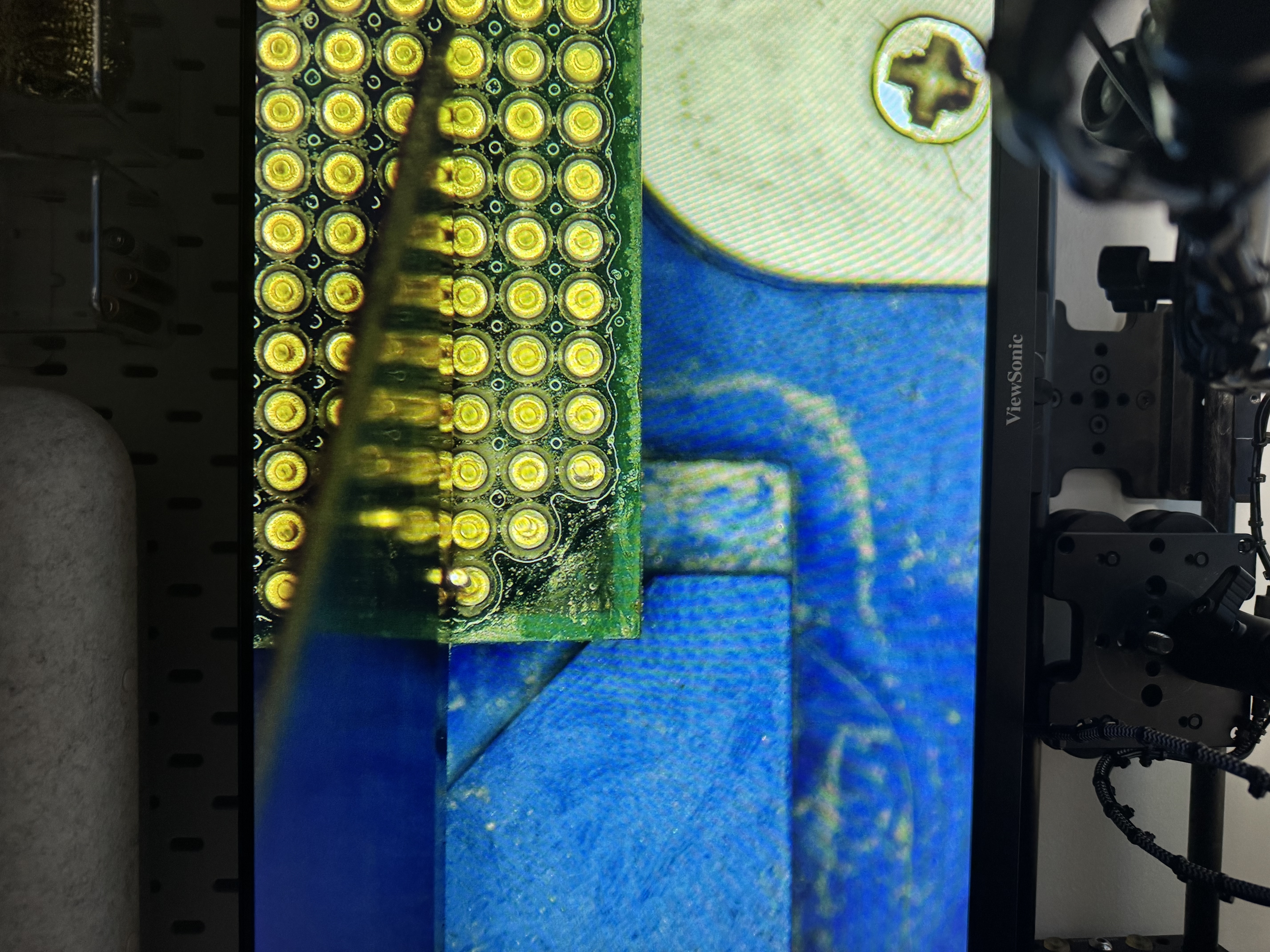
It didn't take too long to unbend and align every single pin. The next day I bought the Pro'sKit precision tweezers, and they helped me unbend a final two pins that were hard to reach with the razor.
Results
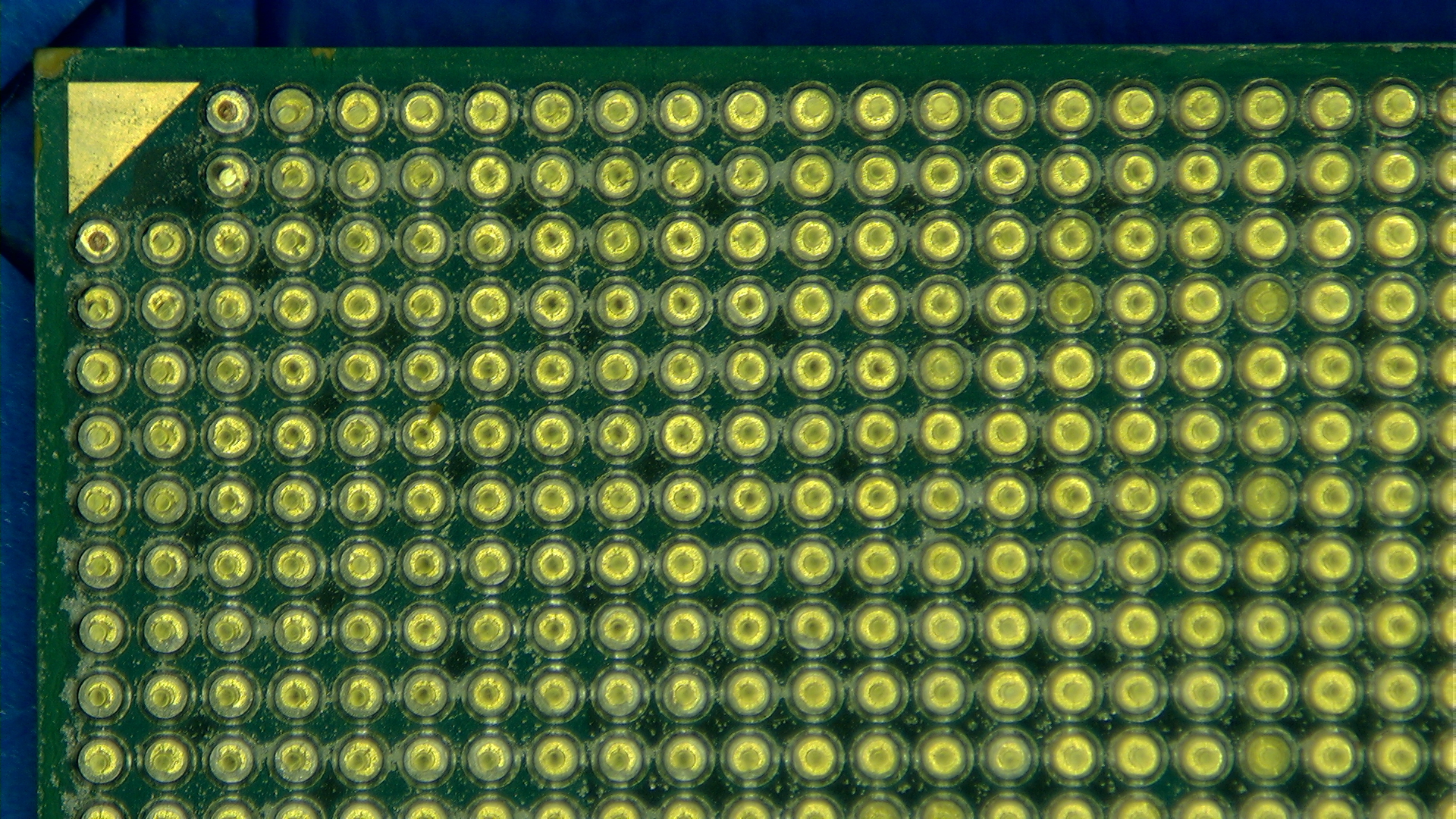
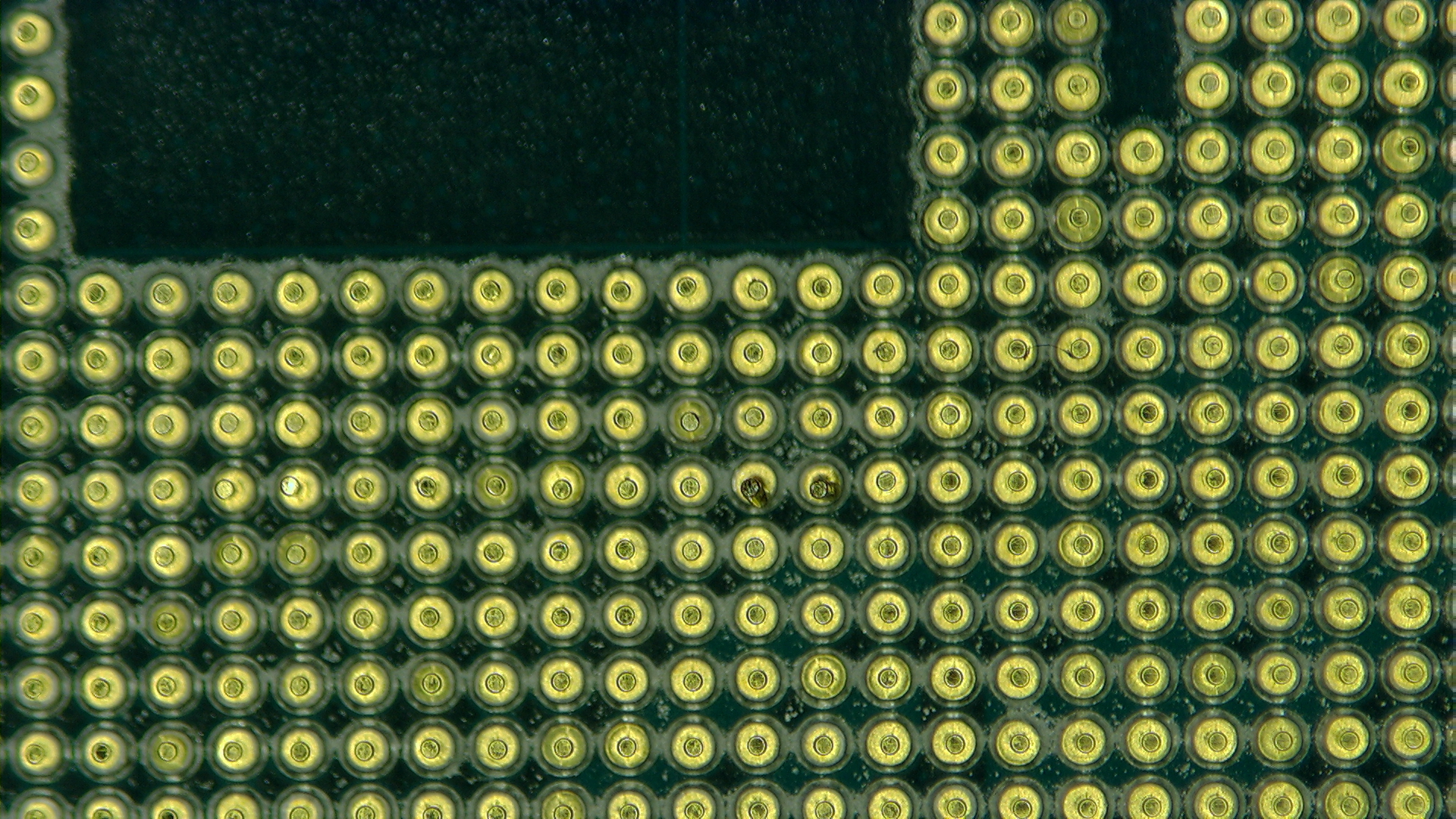
The CPU looked as "better than factory" as I could make it, but those final two pins worried me.
These two final pins had been bent so badly that the copper had been slighly damaged on them. If I could describe the damage, it's like when you start chopping down a tree with an axe and you get half way and stop chopping. You're left with a tree that stands, but is just a few more chops from falling over.
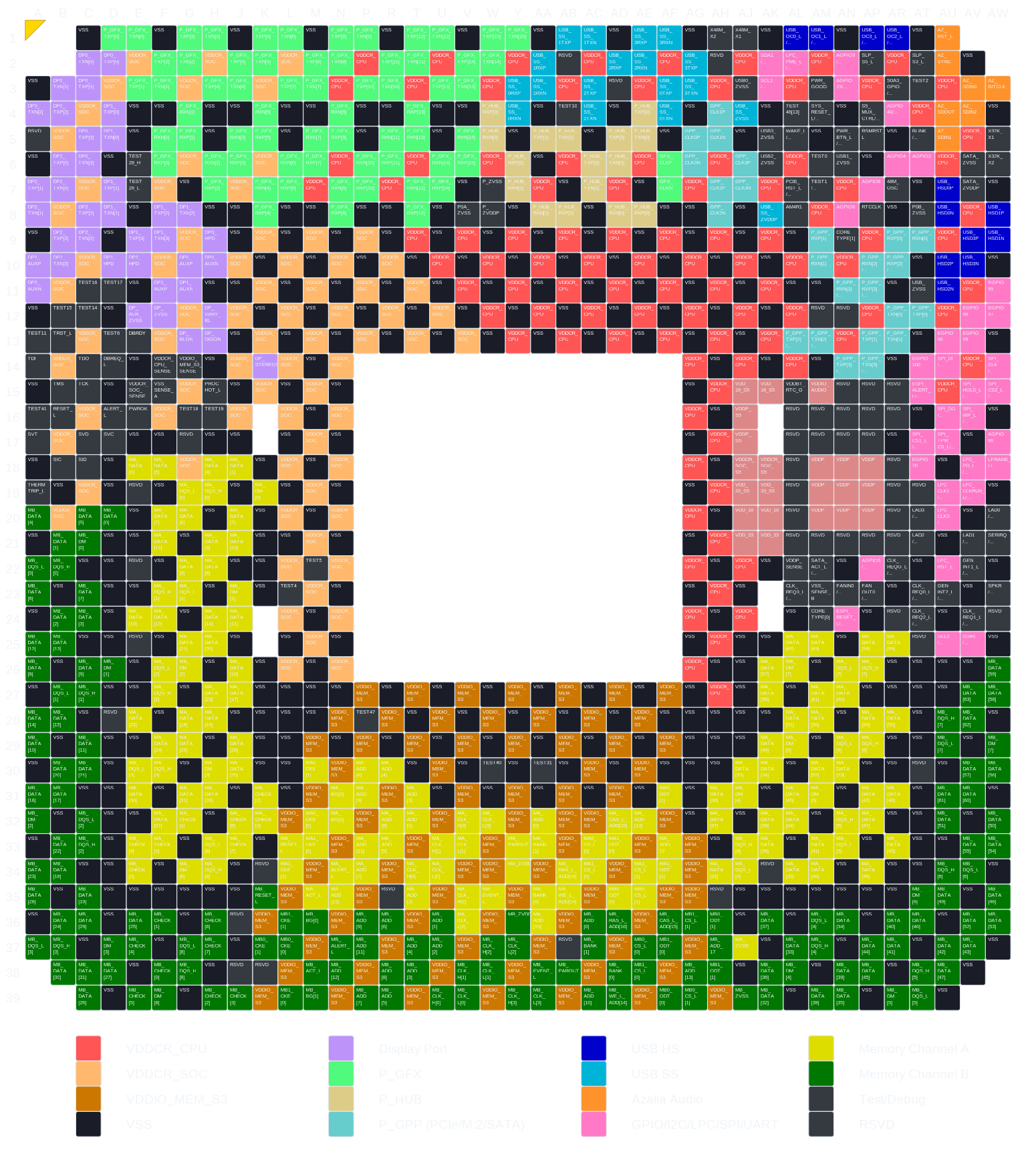 Credit: pcpowerup.co.uk
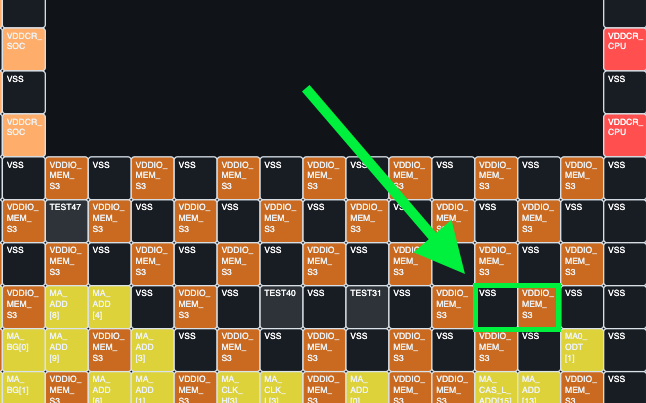
I was curious as to what these pins were. I was really hoping that I wouldn't need to desolder them with hot air and then resolder some new pins from a donor processor. Though that probably would have been a fun learning experience.
If you take any two pins right next to each other on an AM4 processor, there's a high chance that one of those pins is a VSS (ground) pin.
In this particular case, the non-ground pin was VDDIO_MEM_S3. I believe this manages voltage for DDR bus signaling. I'm assuming if this pin were to be damaged, either the CPU won't POST, or one of the buses would not be functional.
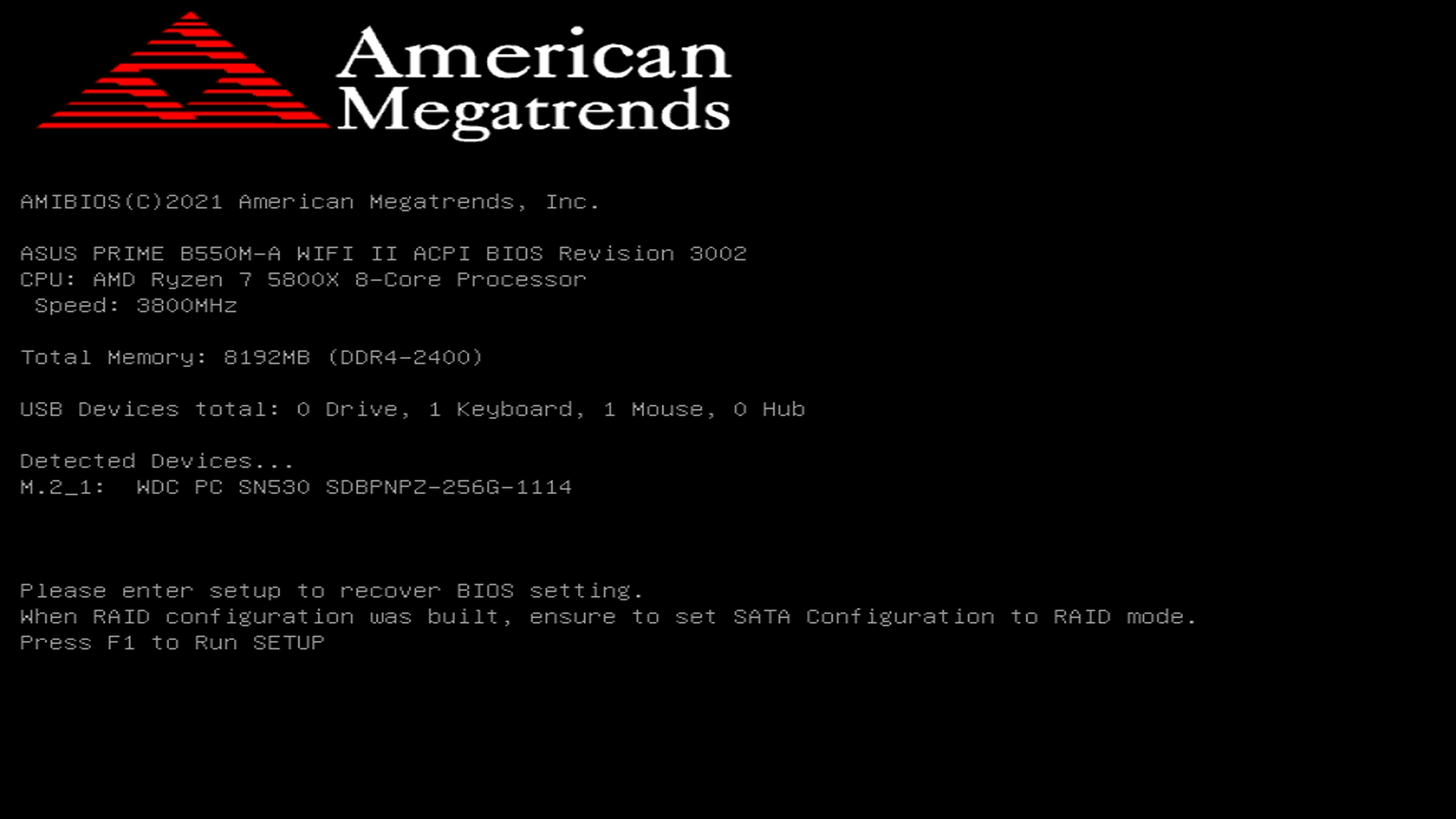
Luckily, the 5800X was able to slot easily into the ASUS PRIME B550M-A WIFI II motherboard and POST with one stick of DDR4 ram.
I know that given my observation on the VDDIO_MEM_S3 pin, it deserved a test with a full RAM kit, but given the memory economy these days I don't have a full DDR4 kit on hand. So, I plan on revisiting this when I do have a full kit.
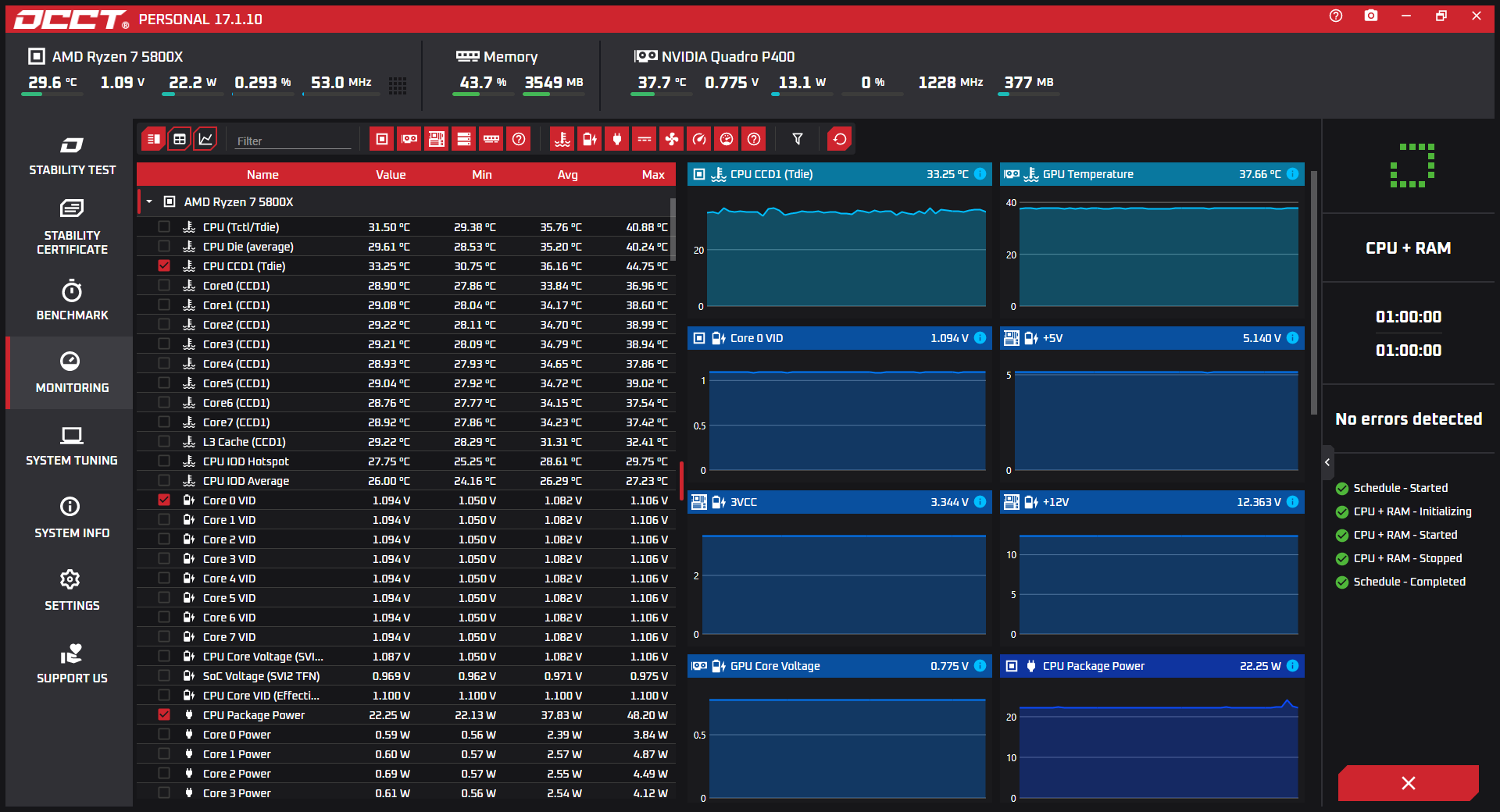
I let OCCT run for one hour and saw no issues. I will revisit this test with a full kit, but in the meantime, I do consider this restoration to be a success.